
Long reads.
No clickbait. Just what I’d say to a friend over coffee, with the science to back it up.
Is multitasking bad for productivity? Yes, and here is why
You think you are doing two things at once. For demanding tasks, your brain is mostly doing one thing, then another, with a small tax on every switch.
Read the full article →Does meditation actually change your brain?
I used to roll my eyes at the glowing brain scans. So I went looking for the boring answer. What meditation really changes is smaller than the headlines, and more useful.
Read article →How to focus for hours without getting distracted
Focus is less a willpower problem than a reward problem. Once you see what your brain is actually chasing, holding attention for hours stops feeling heroic.
Read article →How to stop doomscrolling and reclaim your focus
You did not mean to lose forty minutes to your thumb. Doomscrolling is not a willpower problem, it is a reward loop. Here is how to break it.
Read article →Why can't I focus even when I try?
You sit down, close the tabs, promise yourself you'll concentrate, and ten minutes later you're reading the same sentence for the fourth time. There is a reason trying harder so often backfires.
Read article →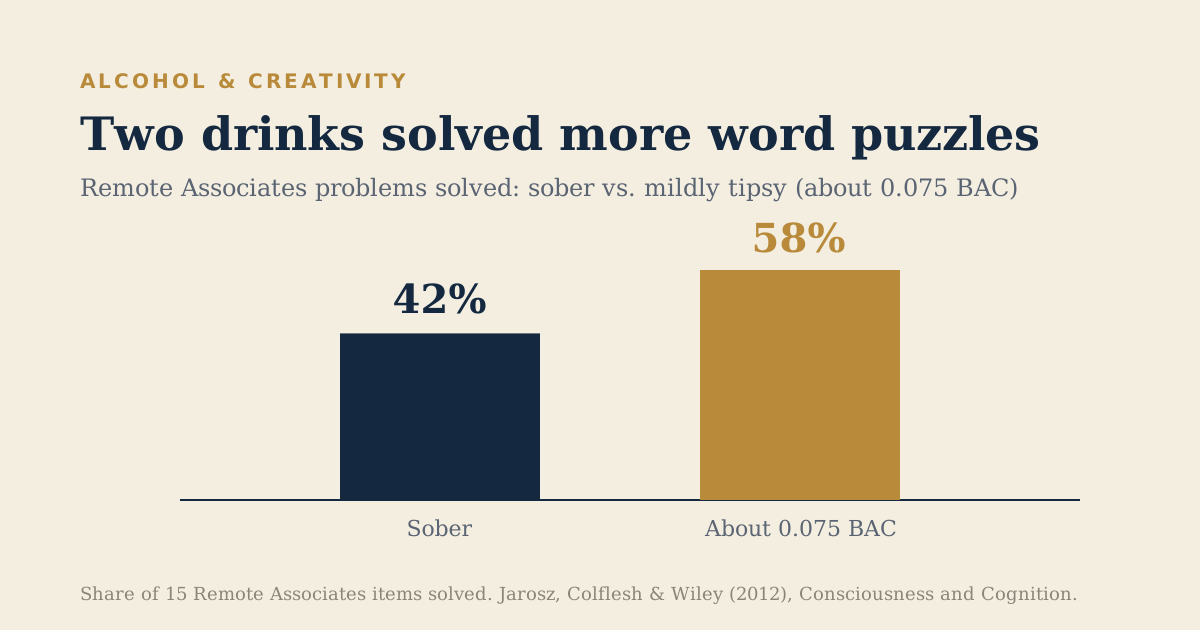
Does alcohol make you more creative?
I wrote my loosest first drafts with a glass of wine going, and for years I gave the wine the credit. Then I found the study. A mild buzz does help, but only for finding ideas, never for building them.
Read article →How long does caffeine stay in your system?
That afternoon coffee feels harmless by bedtime. Your brain disagrees, and the pharmacology explains why your sleep can get quietly worse.
Read article →Does tart cherry juice actually help you sleep?
Tart cherry juice does nudge you toward sleep, but not the way the wellness internet thinks. The mechanism is small, specific, and easy to sabotage.
Read article →Why am I so tired even after 8 hours of sleep?
Eight hours in bed and you still wake up feeling hungover. The problem isn’t the number. It’s what your brain was actually doing during those hours.
Read article →How do you fall asleep when your mind won't shut up?
You're exhausted, the lights go off, and your brain files in for its night shift. Trying harder makes it worse, and once you see why, the fix is almost embarrassingly simple.
Read article →Why Do I Wake Up at 3am Every Night?
You fall asleep fine, then snap wide awake at 3am like clockwork. The cause is often biological and predictable, and often fixable once you understand what your body is actually doing at that hour.
Read article →How Long Should a Power Nap Be?
A power nap can sharpen your afternoon or ruin it, and the difference is often just ten minutes. Here's the mechanism that makes the timing matter so much.
Read article →How does alcohol affect your sleep, really?
Alcohol is a brilliant sedative and a terrible sleep aid. Once you see what it does to the second half of the night, you stop blaming your mattress.
Read article →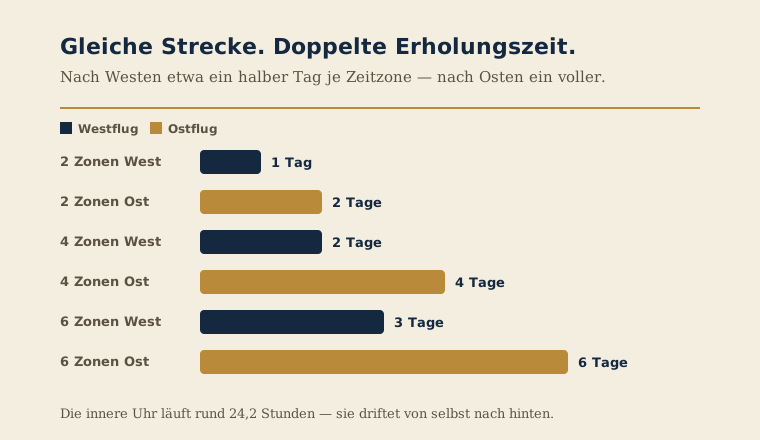
Why is flying east worse than flying west?
Same six time zones, same flight length. One direction leaves you functional by Wednesday, the other has you awake at 4am for a week. The cause is twelve minutes a day.
Read article →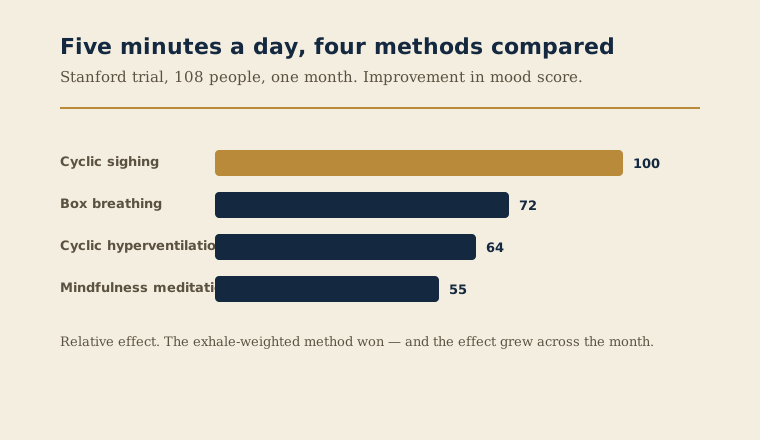
How to calm your nervous system fast
Told to breathe deeply, most people take a big dramatic inhale, which is precisely the half that speeds the heart up. A Stanford trial compared four methods for a month, and the winner takes five minutes.
Read article →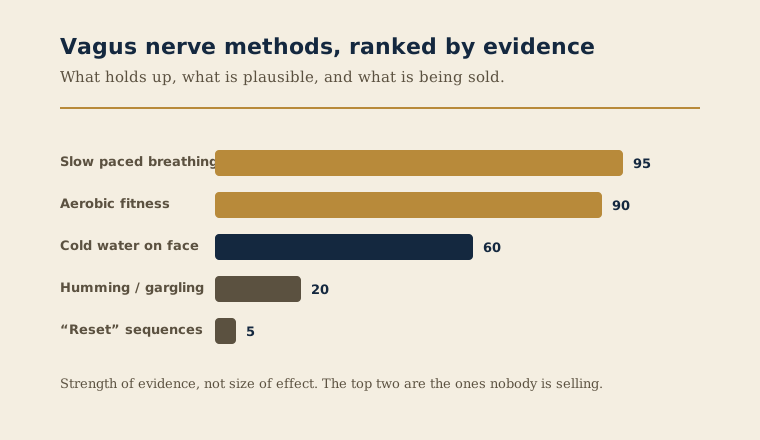
Vagus nerve exercises: do they actually work?
About 80% of the vagus nerve’s fibres carry information upward, from your organs to your brain. That single fact explains both why body-first methods work and why the “reset” videos are nonsense.
Read article →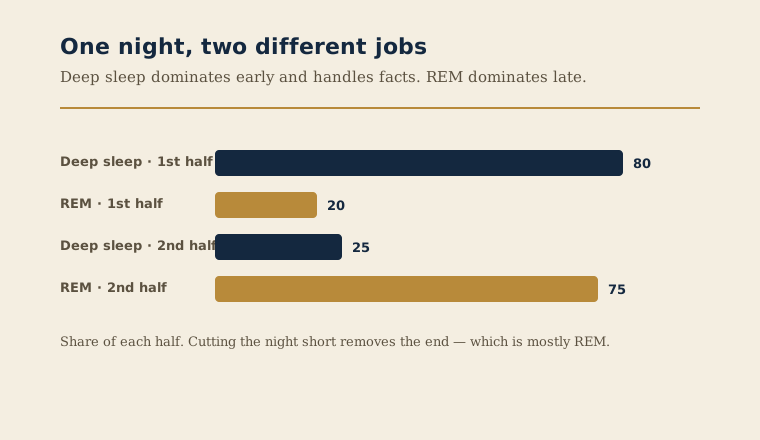
How sleep turns today into memory
You don’t store a memory when you make it. You store a draft. The work that turns it into something you still have in a month happens later that night, while you’re unconscious and not participating.
Read article →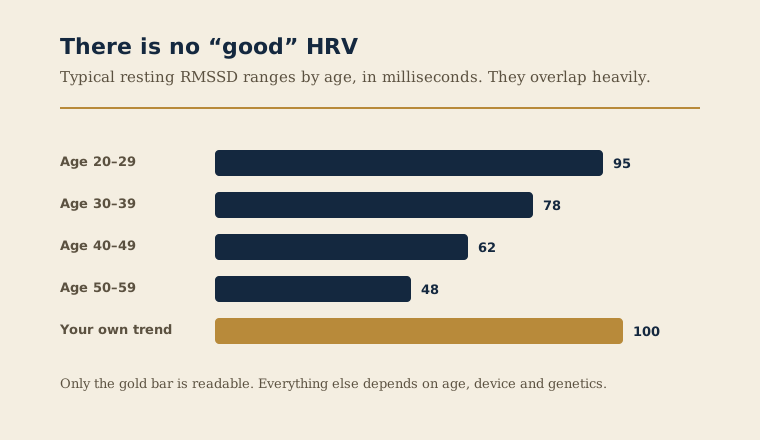
What is a good HRV, and can you improve it?
34 one morning, 71 the next. I built theories about both. Neither number meant what I thought. I was reading a thermometer as though it were a grade.
Read article →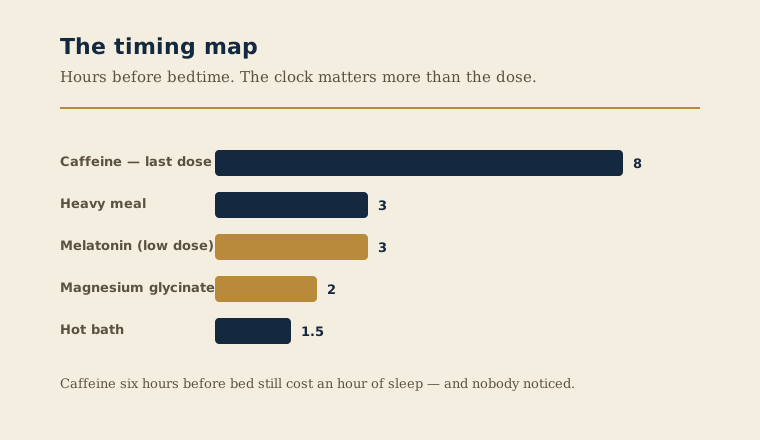
When to take supplements for sleep and focus
Most supplement disappointment isn’t a dose problem, it’s a clock problem. In one trial, caffeine taken six hours before bed cost an hour of sleep, and the people it happened to never noticed.
Read article →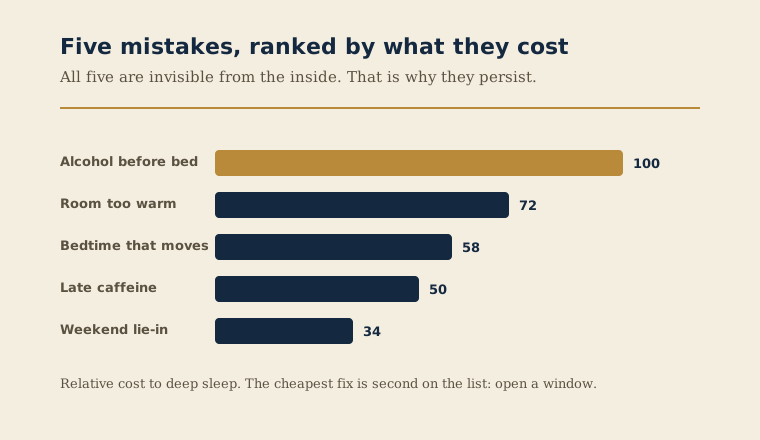
5 mistakes quietly ruining your deep sleep
You can sleep eight hours and still wake up feeling like you didn’t. Every one of these is invisible from the inside: you feel fine at 11pm and unaccountably flat on Wednesday.
Read article →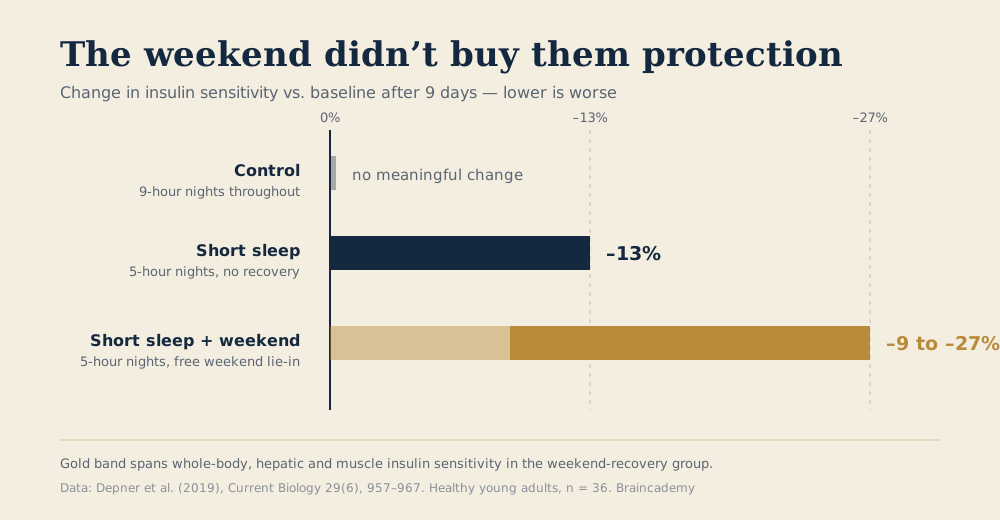
Can you catch up on sleep on the weekend?
One glorious unset alarm on Saturday used to feel like cheating the system. Then researchers ran it properly for nine days, and the weekend-recovery group came out no better protected than the group that never got a weekend at all.
Read article →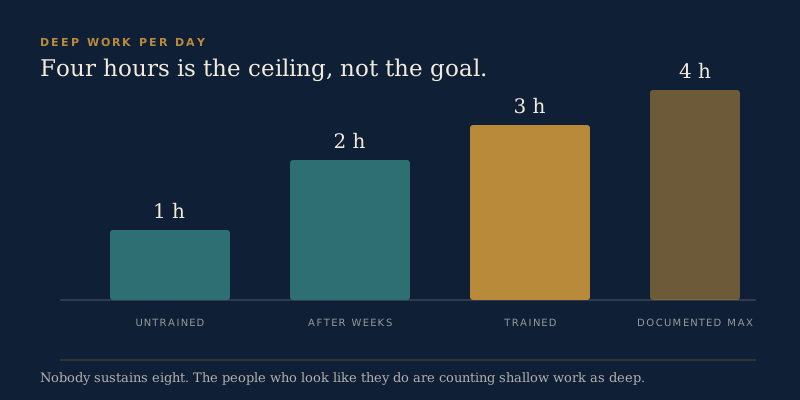
How many hours of deep work are actually possible in a day?
I used to block eight hours and call it a focus day. What I was really doing was two hours of work and six hours of moving things around. Here is the honest number.
Read article →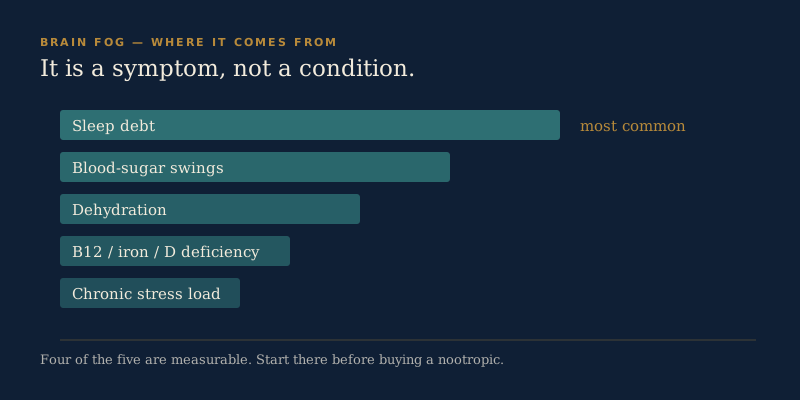
What actually causes brain fog, and what to check first
Brain fog is not a diagnosis. It is what several very different problems feel like from the inside. Four of the five most common causes can be measured this week.
Read article →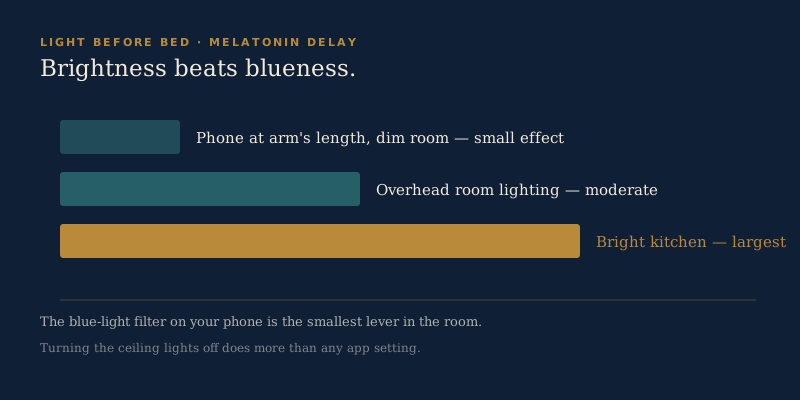
Does blue light before bed really ruin your sleep?
The blue-light filter is the smallest lever in the room. Turning off the ceiling lights does more than any app setting. Here is why brightness beats blueness.
Read article →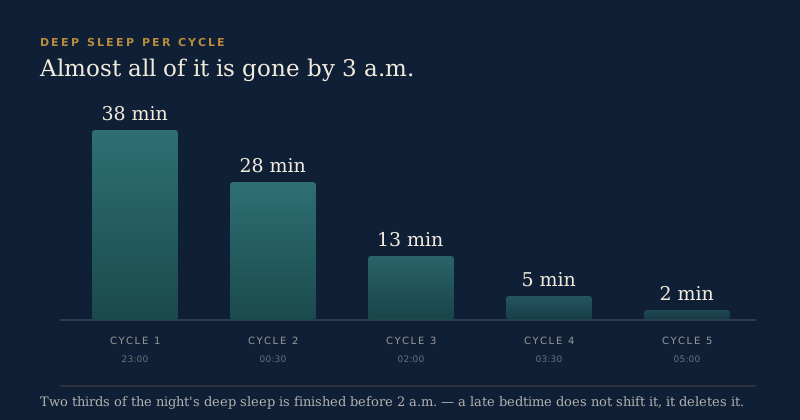
How to increase deep sleep, and what actually moves it
I thought deep sleep was something you got more of by sleeping longer. It mostly isn't. Most of it comes in the first few hours after you fall asleep. Here is what actually moves the number.
Read article →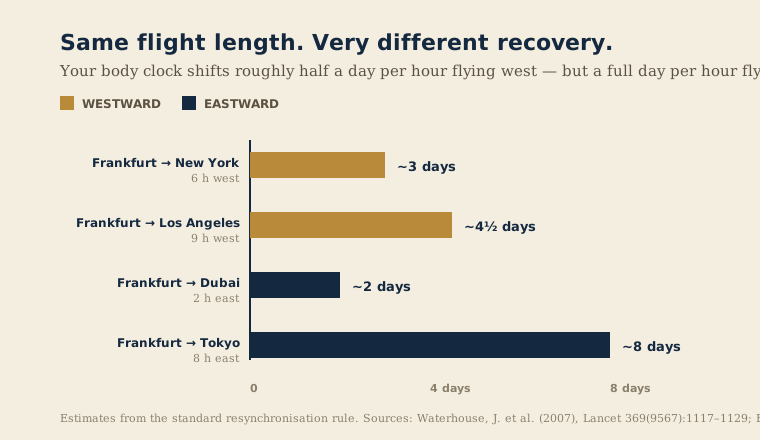
How many days does it take to adjust to jet lag?
I gave myself two days after an eight-hour eastward flight. The honest number was closer to eight. Here's the resynchronisation rule researchers actually use, and why east costs you more.
Read article →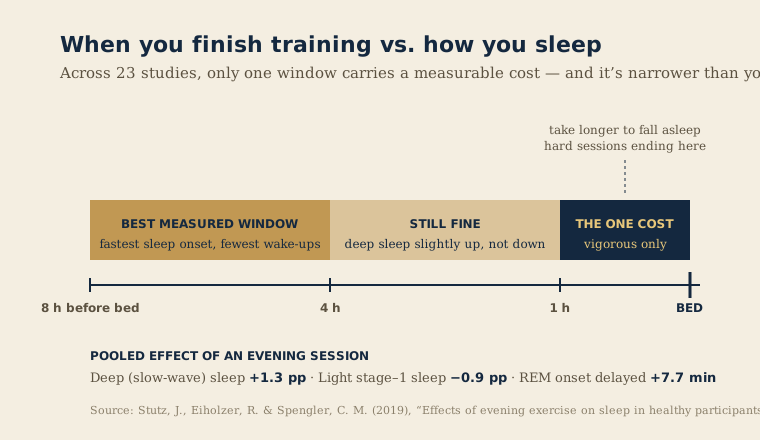
Does exercise before bed ruin your sleep?
I skipped a year of evening sessions because of a rule I'd never checked. Then I found the meta-analysis: evening training doesn't wreck your sleep. It slightly deepens it. Here's the one narrow window that does cost you.
Read article →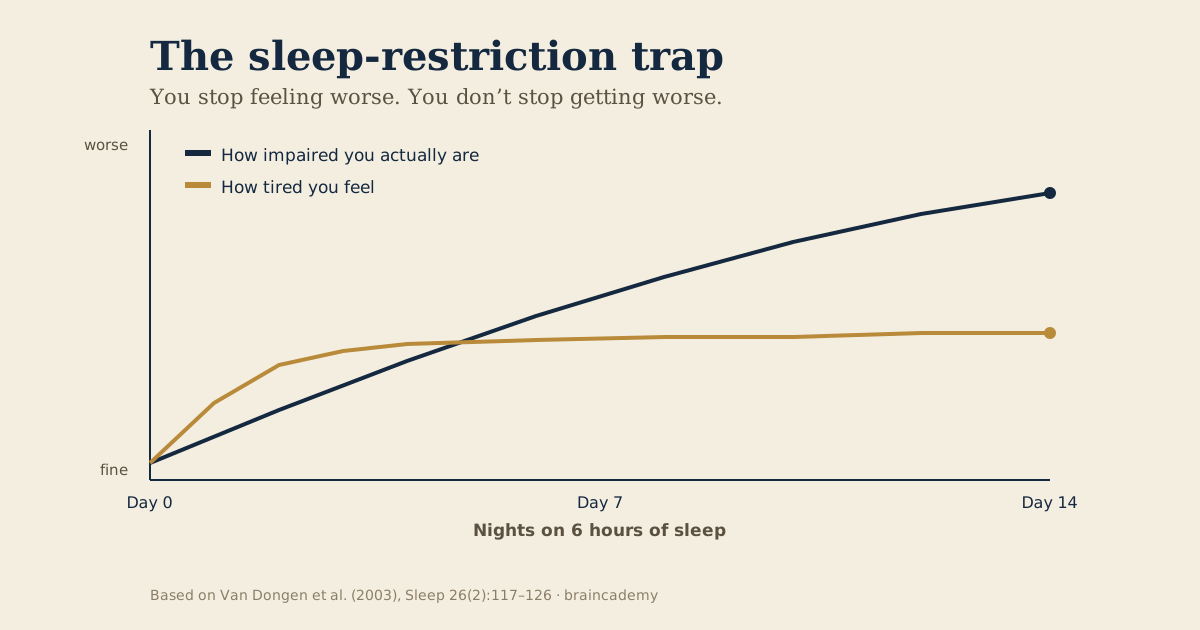
Can you train your brain to need less sleep?
I spent months quietly proud of running on five hours, sure I'd 'trained' my way there. I hadn't. Here's the sleep-restriction science, the study that settles it, and the broken gauge that makes you feel fine while you fall apart.
Read article →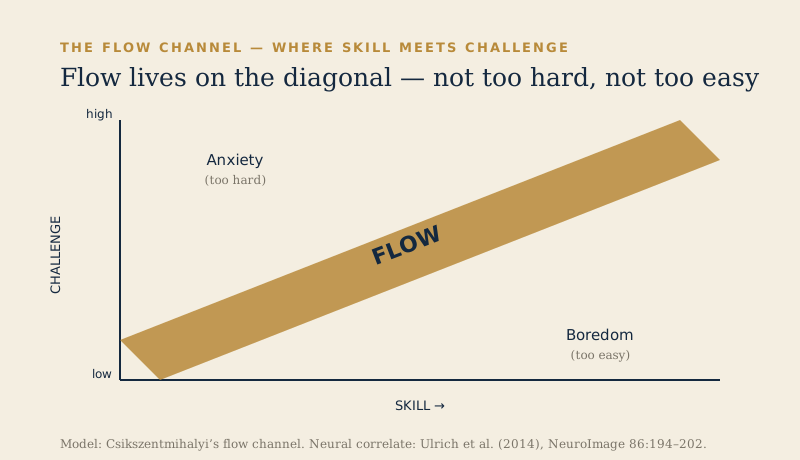
How to get into a flow state faster
Flow isn't a mood you wait for. It's a set of conditions you can set on purpose. Here's the science of what actually flips the switch, and the fastest way in.
Read article →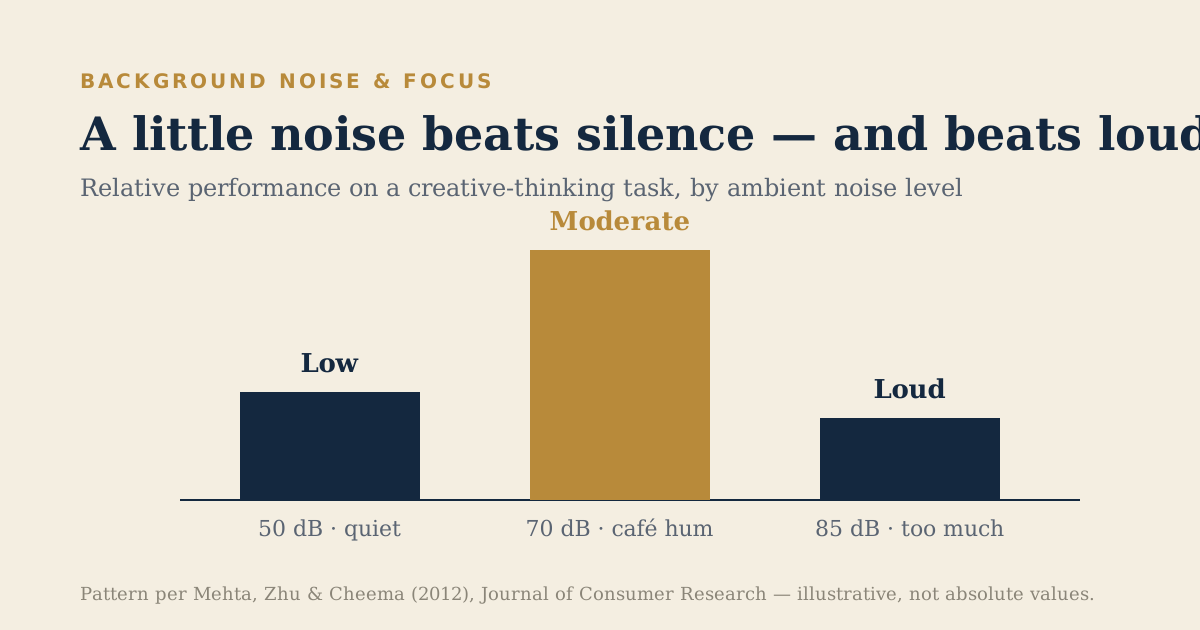
Does background noise help concentration?
I spent years treating silence as the only serious way to work. Then a dead-quiet week got nothing done and I started to wonder if I'd had it backwards. Here's the science of noise and attention, and the one distinction that changes everything.
Read article →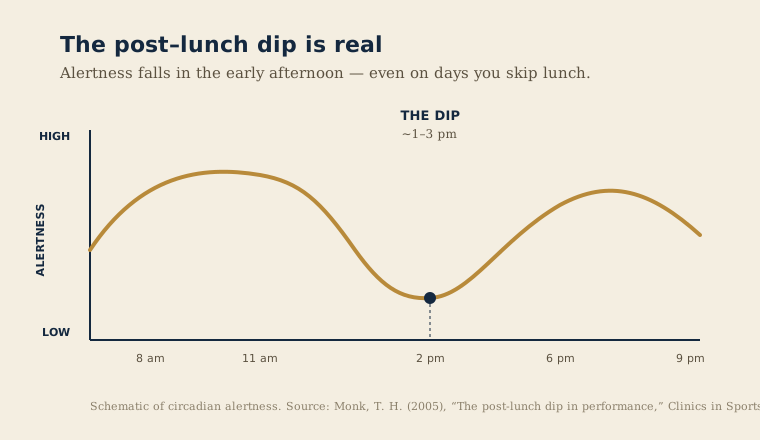
Why do I lose focus after lunch?
For years I blamed the sandwich. Turns out the 2pm fog is mostly hardwired: a circadian dip that shows up even on the days you don't eat. Here's the science, and how to work with it instead of drowning it in coffee.
Read article →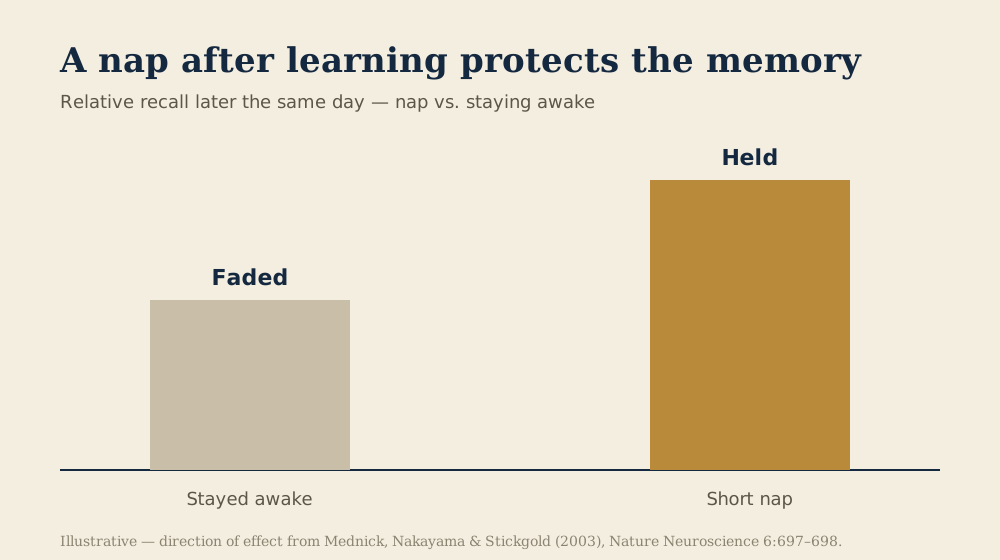
Does napping after learning improve memory?
I used to power through after studying, sure that momentum was the point. Turns out the smartest move was almost embarrassing: lie down. Here's the memory science and which nap to take.
Read article →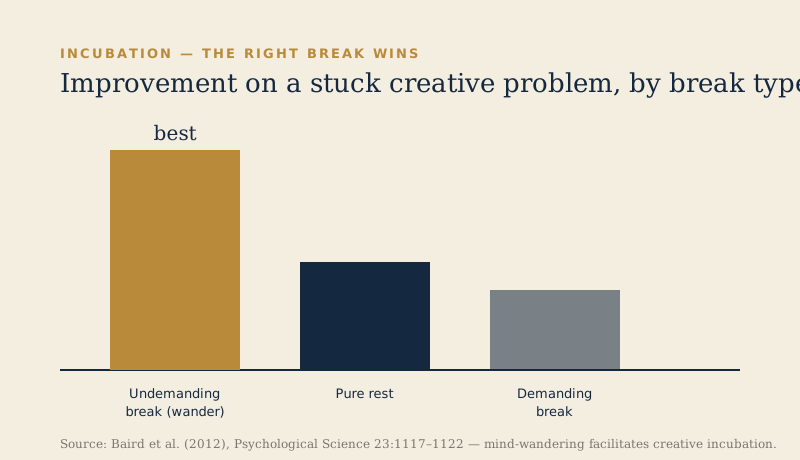
Does taking a break make you more creative?
Staring harder at a stuck problem almost never solves it. Walking away does, but only a specific kind of break. Here's the incubation science and how to use it on purpose.
Read article →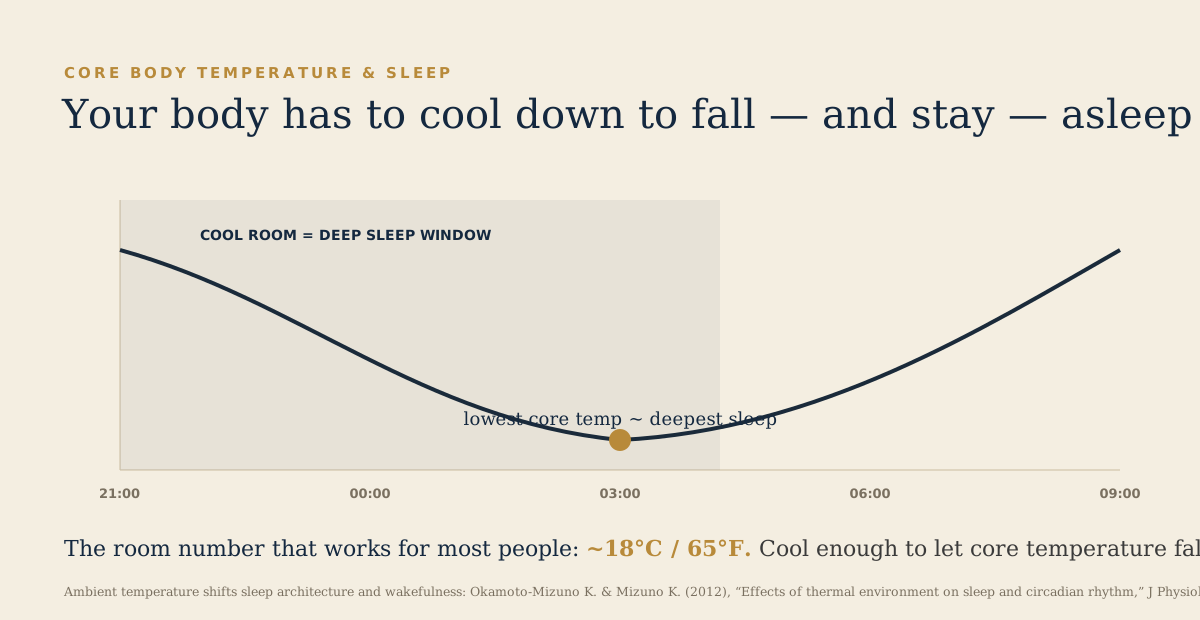
The best bedroom temperature for sleep (and why yours is probably wrong)
I blamed my bad sleep on stress, screens, magnesium, everything except the one thing that turned out to matter most. My bedroom was too warm. Here's the science and the fix.
Read article →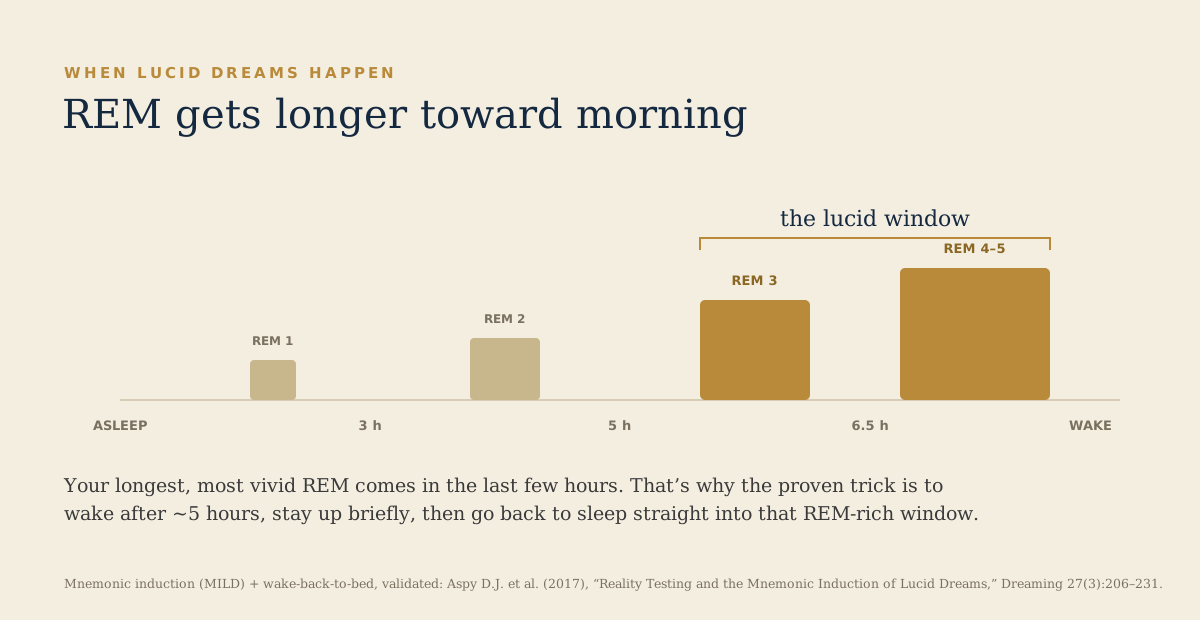
How to lucid dream: does it actually work?
Becoming aware you're dreaming, while you're dreaming, sounds like fantasy. But one technique combination has actual evidence behind it. Here's how lucid dreaming really works.
Read article →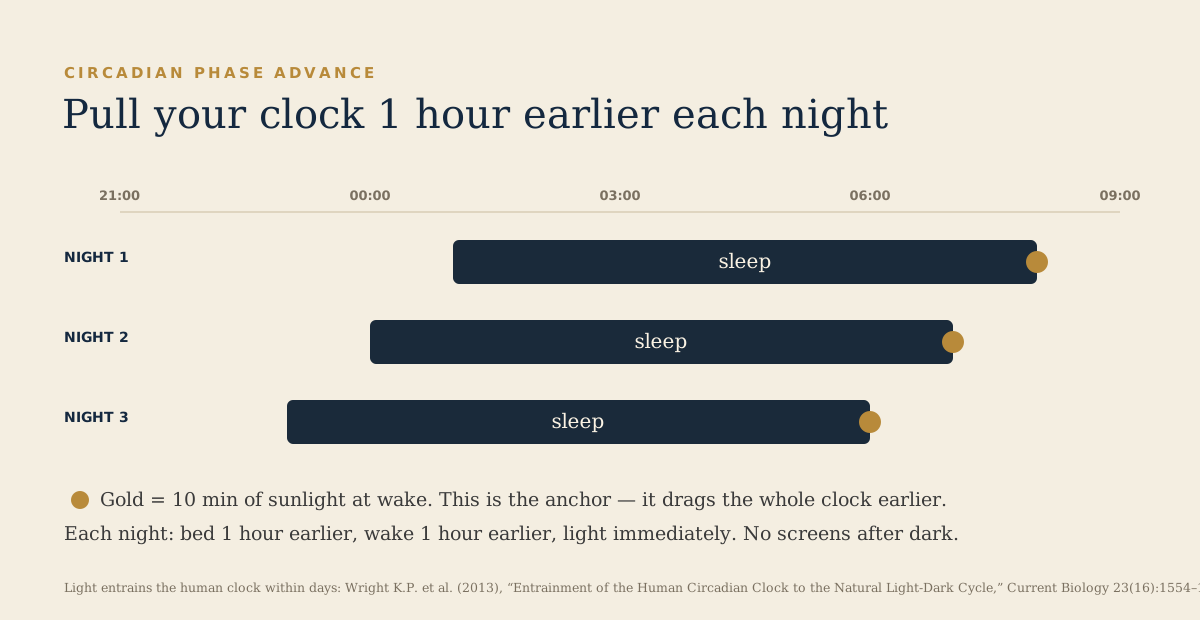
How to fix your sleep schedule in 3 days
A wrecked sleep schedule isn't willpower. It's a clock pointing the wrong way. Here's the 3-day light-and-timing reset that actually shifts it back.
Read article →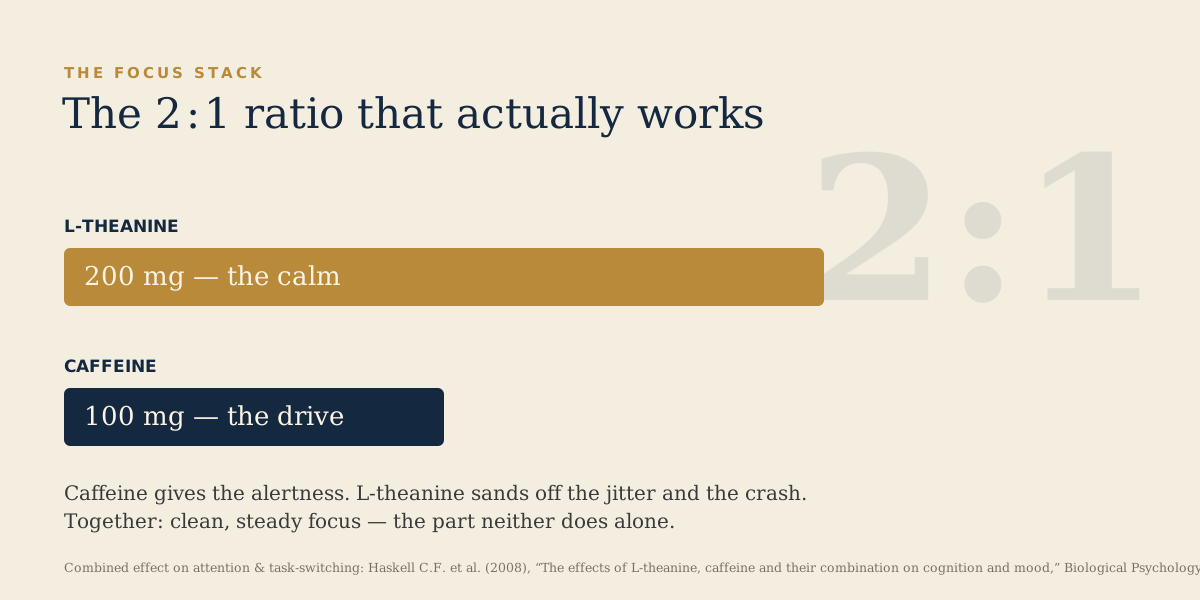
The L-theanine and caffeine ratio for focus
Caffeine alone can leave you wired and tired. Paired with L-theanine, it improved attention-task accuracy in several trials. Here's what the studies actually used, and what the pair doesn't do.
Read article →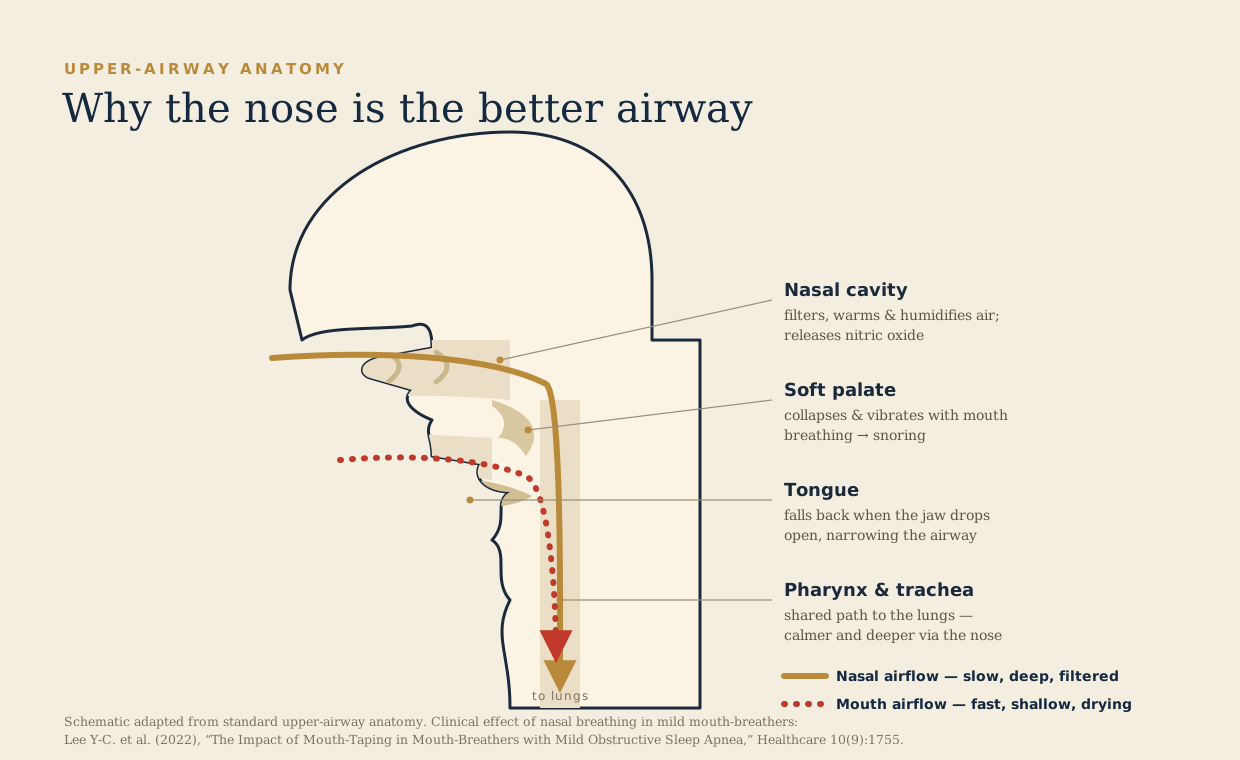
Mouth taping for sleep: does it actually work?
Everyone on the internet is taping their mouth shut at night. I tried it for three weeks. Here's what the actual research says, who it helps, and who should not touch it.
Read article →The 90-Minute Focus Block: Why Some People Prefer It to Pomodoro
The 25-minute Pomodoro timer is the default for focused work, but for deep, demanding tasks many people find it too short. What the 90-minute-cycle research really shows, and a simple protocol.
Read article →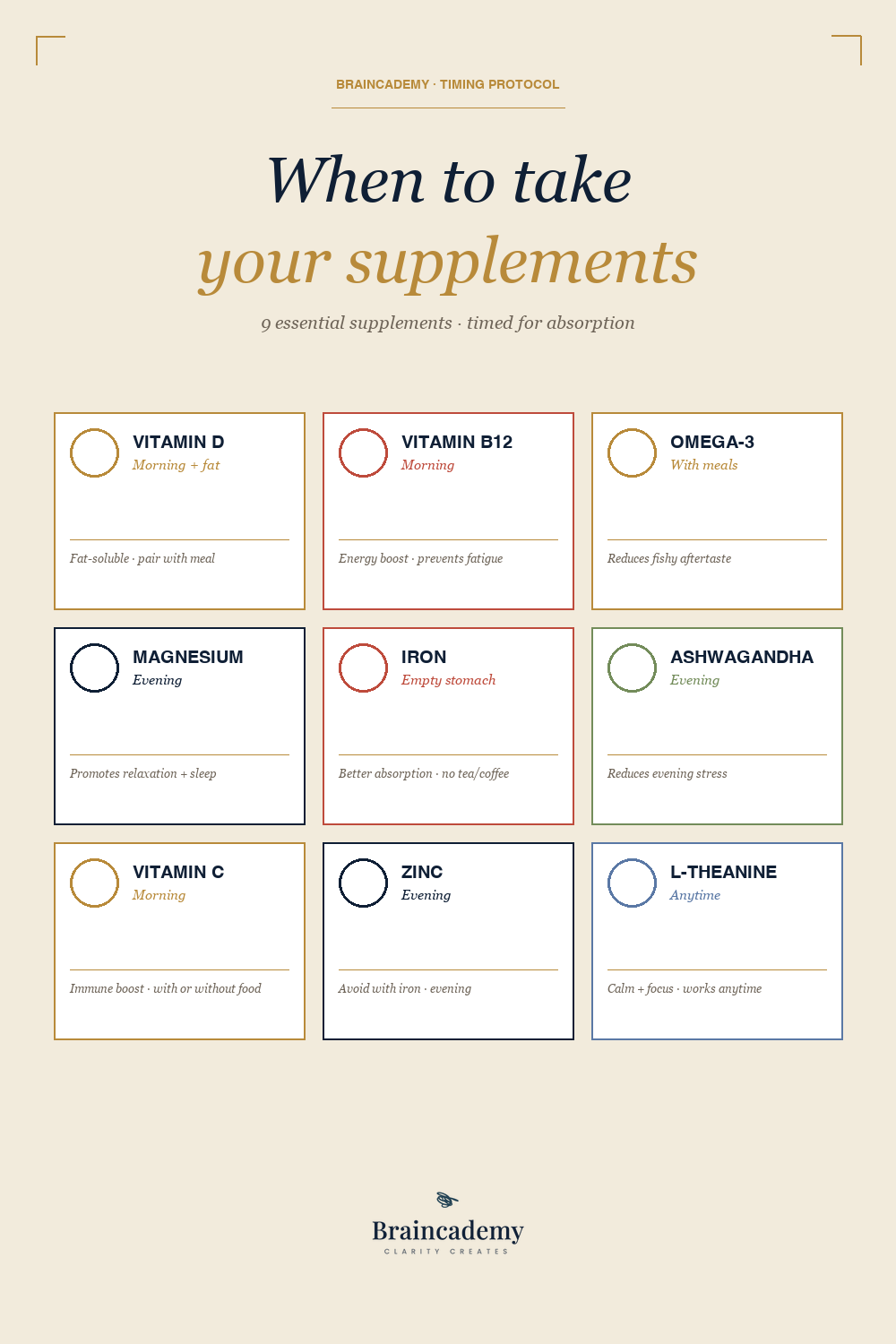
The magnesium thing nobody tells you
I took magnesium for sleep for two years before I figured out why it wasn't working: the wrong form. Glycinate vs oxide vs L-threonate, dose and timing.
Read article →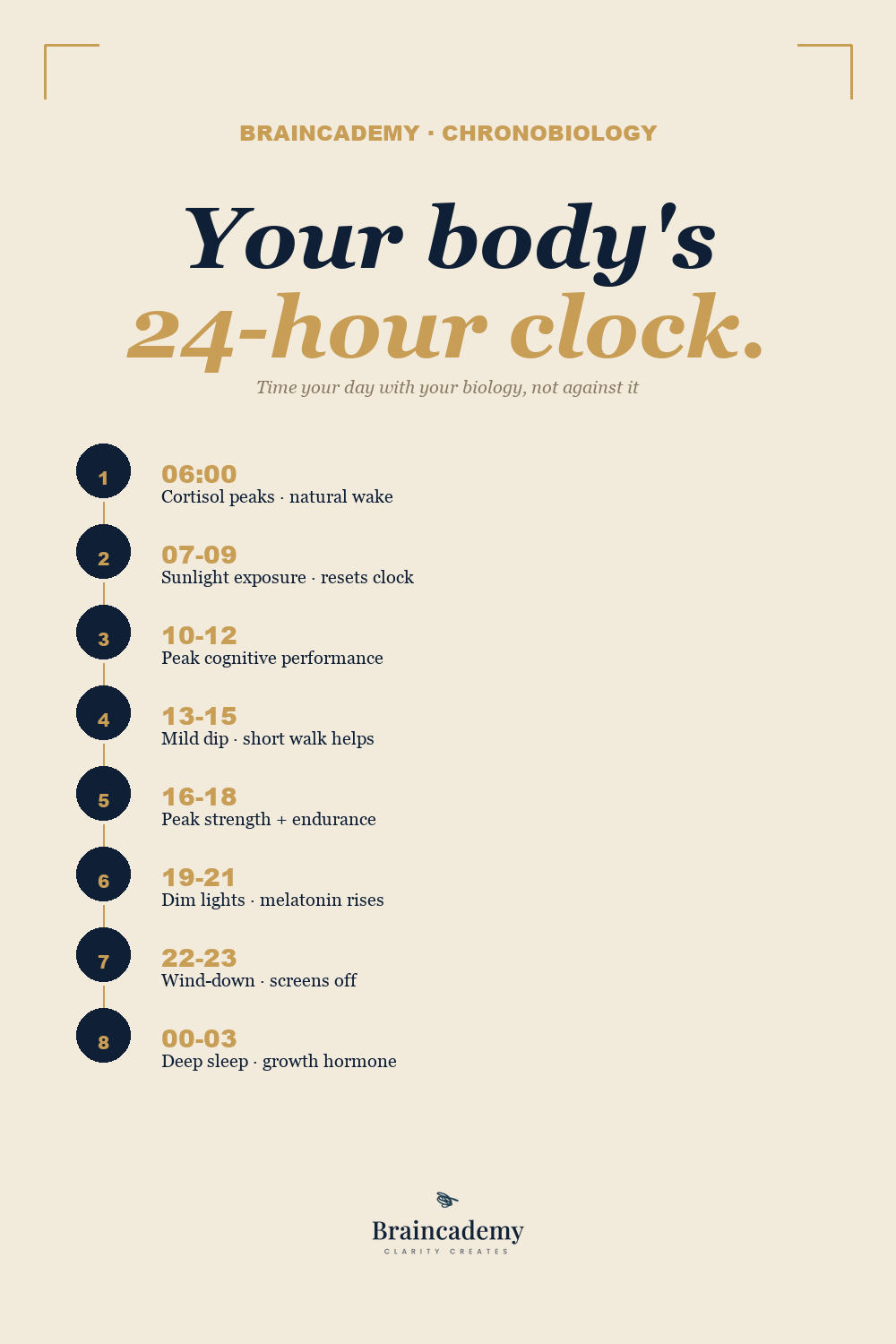
Why morning sunlight belongs next to your coffee
Morning sunlight boosts the cortisol rise after waking and anchors your body clock. The circadian science, and what delaying your first coffee does (and doesn't) do.
Read article →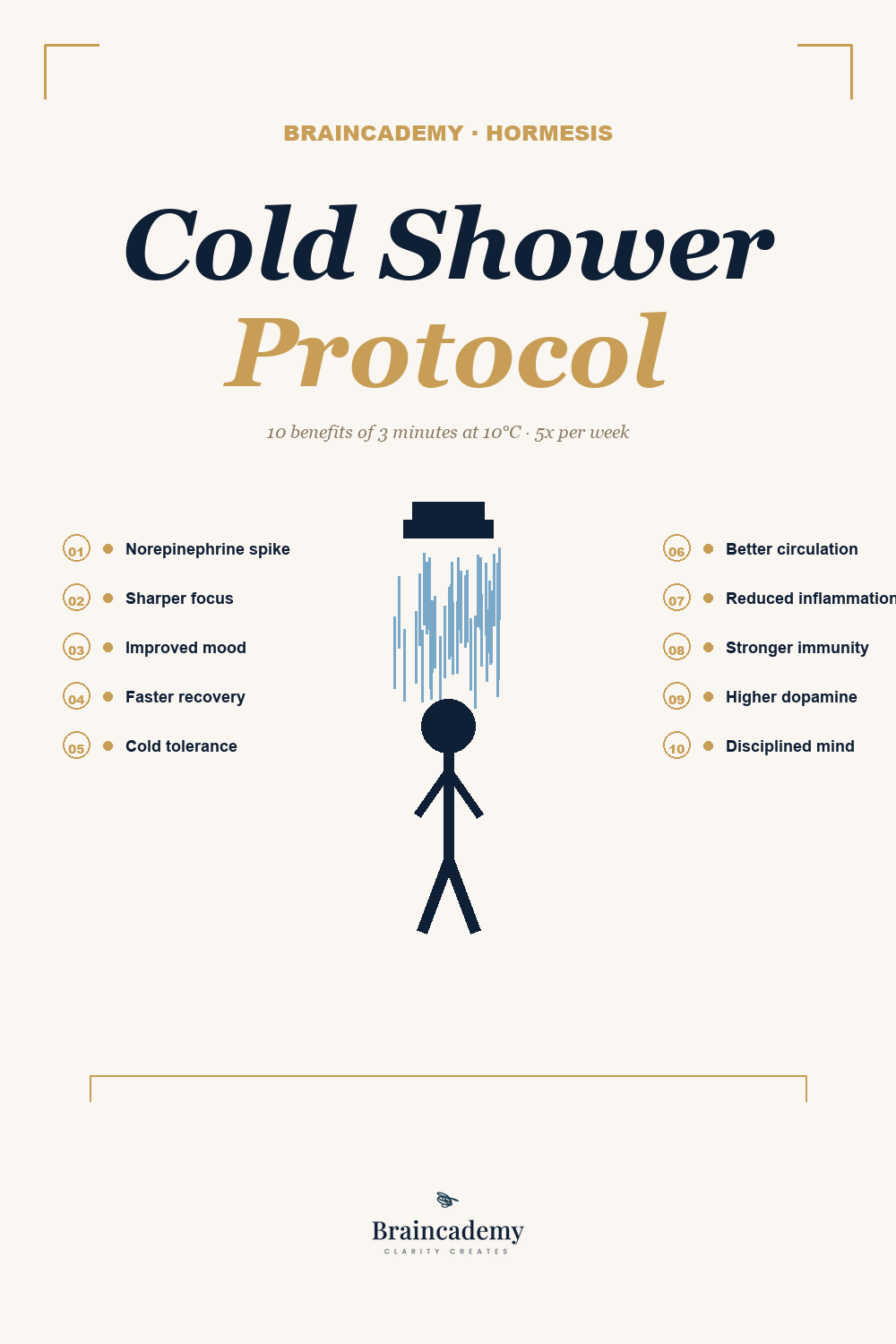
Three minutes at ten degrees
The famous cold-water dopamine boost came from an hour in 14 °C water, not a quick shower. What the research really shows, how to start with your tap, and when to check with a doctor first.
Read article →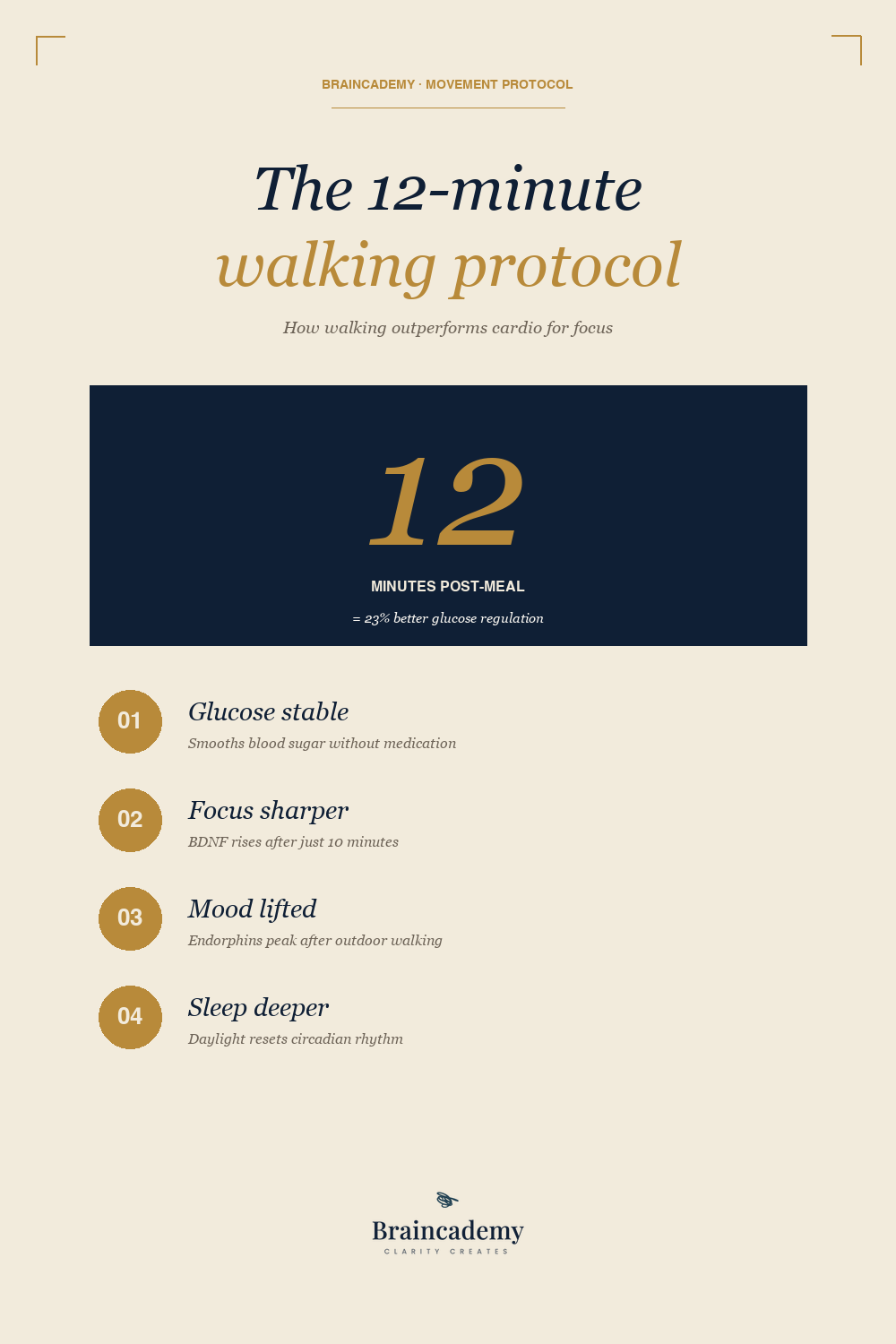
The after-meal walk that blunts your blood-sugar spike
A short walk after a meal blunts the post-meal glucose spike. The mechanism, the dose used in trials, what the studies measured, and the behavior-design trick to actually do it.
Read article →