
The magnesium thing nobody tells you
I tried magnesium for sleep for two years before I figured out why it wasn’t working. I was taking the wrong form.
Magnesium oxide is the cheap stuff in most multivitamins, and it’s poorly absorbed. One commonly cited analysis of commercial preparations put oxide’s bioavailability at about 4%, far below the chloride, lactate and aspartate forms tested (glycinate wasn’t tested).[1] The rest mostly gives you stomach issues, and you start blaming the magnesium when really you bought the equivalent of chalk.
For everyday use, magnesium glycinate is well tolerated and less laxative than oxide. L‑threonate (sold as Magtein) is the form studied for brain magnesium, mostly in animals. Magtein was developed at MIT and the clinical studies on cognitive function used that exact formulation.
Figure 1
Not all magnesium is the same
Magnesium oxide
- The cheap form in most multivitamins
- About 4% bioavailability in one analysis
- Mostly known for stomach issues
Magnesium glycinate
- Well tolerated for everyday use
- Less laxative than oxide
- Check the label for elemental magnesium
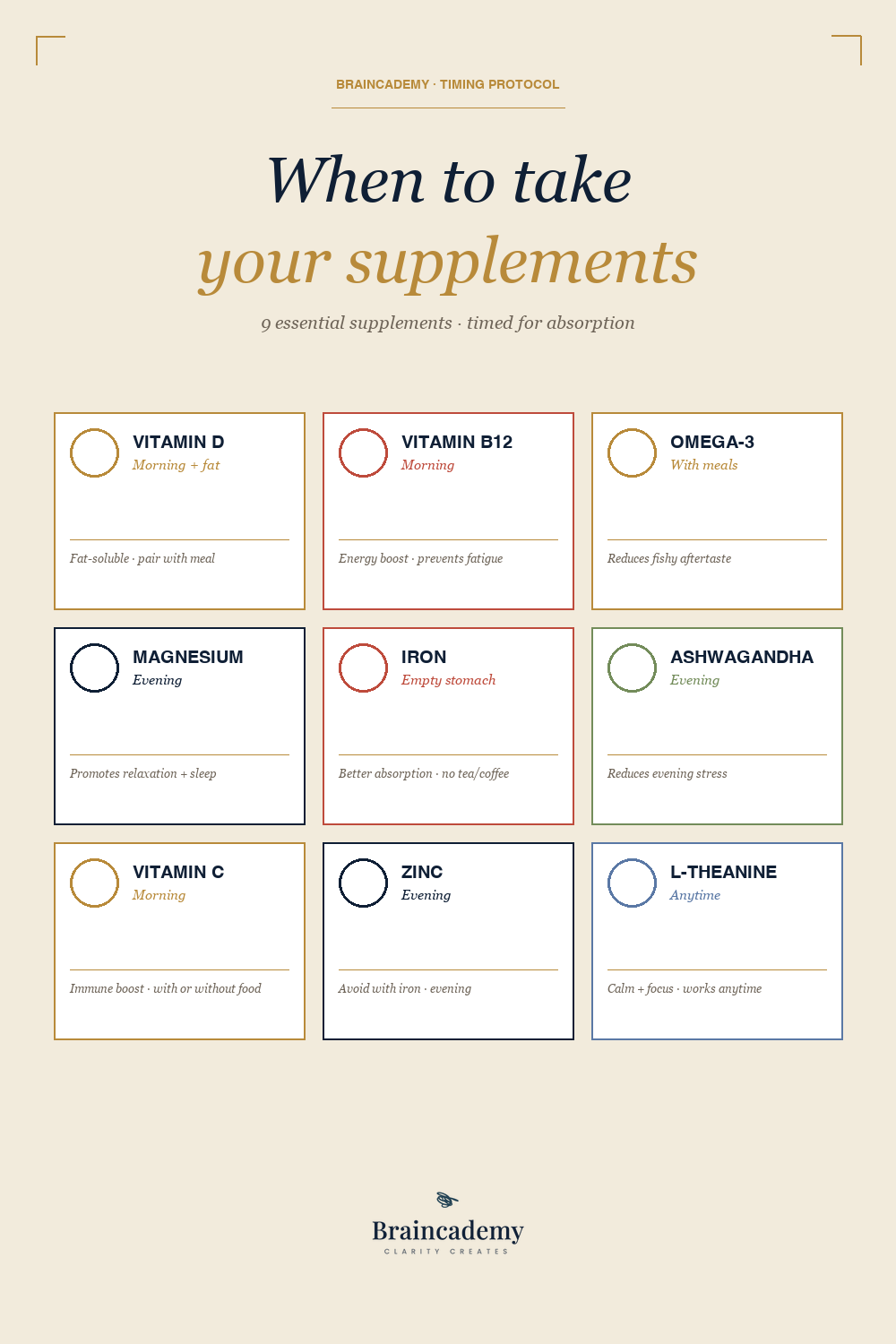
The protocol I run: about 200–300 mg of elemental magnesium as glycinate (check the label), 90 minutes before bed, under the 350 mg/day upper limit for supplements. No caffeine after 2 pm. No screens in bed. That’s the boring honest version. Ask a doctor first if you have kidney disease or take antibiotics or osteoporosis drugs.
If you want to try it yourself, glycinate is widely available on Amazon and any decent pharmacy carries it. Doctor’s Best and Now Foods are the two brands I rotate between. Avoid anything that lists “magnesium oxide” as the first ingredient regardless of how the bottle is marketed.
“If you’re going to spend €25 on something, spend it on the right form.”

Disclosure: Amazon affiliate link · We only recommend gear we actually use.
If your sleep is genuinely broken though, magnesium alone won’t fix it. There are 10 levers and magnesium is one of them. The others are light timing, room temperature, the last hour of your evening, and a few things people never think about.
[1] Firoz M. & Graber M. (2001). “Bioavailability of US commercial magnesium preparations.” Magnesium Research, 14(4), 257–262.
Magnesium is one lever. The guide covers it on its optional supplement page, with dose and safety notes. The Deep Sleep Guide puts the core levers in one plan (light, rhythm, wind-down, bedroom), plus what to do when you lie awake at night and a printable sleep log. 16 pages, €4,99.
GET THE GUIDE →Tools we rate for this. Some are affiliate links, so we may earn a small commission if you buy through them, at no extra cost to you.
Comments
0 comments