
How to lucid dream: does it actually work?
The first time it happened to me I was halfway down a staircase that kept rebuilding itself, and some quiet part of my brain went: wait, staircases don’t do that. And then, I knew. I was dreaming, and I knew it, and I was still in it. Kind of terrifying. Kind of the most interesting thing that’s ever happened to me.
So the honest question: how to lucid dream, and does it actually work, or is it wishful internet stuff? The answer is genuinely yes, for some people, with one specific combination that has real evidence. Let me walk through it.
How to lucid dream: does it actually work?
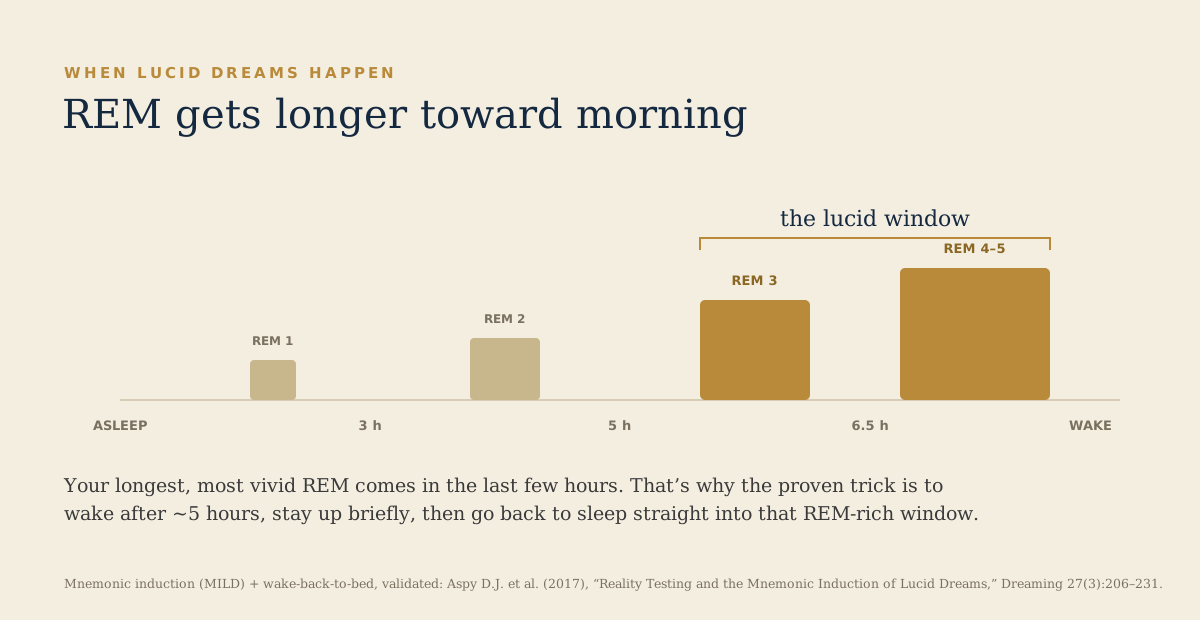
It works, but not like flipping a switch. A lucid dream is just a normal dream where you become aware you’re dreaming. It happens in REM sleep, and the strongest, longest REM comes in the last few hours of the night, which is the whole reason the timing trick below matters so much.
In a large study, only one approach clearly moved the needle: MILD, a memory technique done as you fall back asleep, combined with a brief wake-up in the early morning. That group reported lucid dreams on about 17% of nights. Reality testing on its own (checking through the day whether you’re awake) didn’t raise lucid dreaming, and a 2020 follow-up found it added nothing.[1][2]
Figure 1
What moved the needle in a large study
- ~17%of nights with a lucid dream: MILD plus a brief early-morning wake-up
- No risefrom reality testing on its own
The technique with evidence, and the habit people pair with it
1. Reality testing (optional). Several times a day, genuinely ask “am I dreaming?” and check: try to push a finger through your palm, or read a line of text twice (text warps in dreams). The point isn’t the test. It’s building the habit so the question shows up inside a dream. That’s the staircase moment. On its own, though, it didn’t raise lucid dreaming in the big study. Treat it as an extra, not the engine.
2. MILD + wake-back-to-bed. Set an alarm for about 5 hours in. Wake up, stay up 10–20 minutes, then go back to sleep while repeating an intention (next time I’m dreaming, I’ll remember I’m dreaming) and picturing a recent dream. You’re dropping straight into that long morning REM block with the intention fresh. That’s the part that does the heavy lifting.
Figure 2
MILD plus wake-back-to-bed
- Alarm, hours inWake yourself in the early morning.
- Stay up brieflyA short wake period, then back to bed.
- Set the intentionNext time I'm dreaming, I'll remember I'm dreaming. Picture a recent dream.
- Morning REMFall asleep into the longest REM of the night.
The thing nobody tells you first
None of this works on broken sleep. Lucid dreaming lives in REM, and REM is the first thing your body sacrifices when you’re sleep-deprived, drinking, or going to bed at random times. So weirdly, the prerequisite for fancy dream control is the boring stuff: a steady sleep schedule and enough total sleep that you actually reach those late REM cycles.
Get the basics right first. Then the dreams get long and vivid enough to notice the staircase.
One honest caveat: don’t chase this with random “lucid dreaming supplements.” Galantamine has trial data, but it’s a prescription drug with side effects and interactions, not something to self-dose. Technique and timing are the safe levers.
The one cheap tool that actually helps: a dream journal by the bed. Scribble whatever you remember the second you wake. It trains recall and surfaces your recurring dream-signs, the weird recurring stuff that becomes your “wait, staircases don’t do that” moment. Any notebook works.

Disclosure: Amazon affiliate link · I only recommend gear I actually use.
[1] Aspy D.J., Delfabbro P., Proeve M. & Mohr P. (2017). “Reality testing and the mnemonic induction of lucid dreams: Findings from the National Australian Lucid Dream Induction Study.” Dreaming, 27(3), 206–231.
[2] Aspy D.J. (2020). “Findings from the International Lucid Dream Induction Study.” Frontiers in Psychology, 11, 1746.
Lucid dreaming starts with long, reliable REM, which starts with enough steady sleep. The Deep Sleep Guide puts the core levers in one plan (light, rhythm, wind-down, bedroom), plus what to do when you lie awake at night and a printable sleep log. 16 pages, €4,99.
GET THE GUIDE →Tools we rate for this. Some are affiliate links, so we may earn a small commission if you buy through them, at no extra cost to you.
Comments
0 comments