
Mouth taping for sleep: does it actually work?
Okay, this is going to sound unhinged if you’ve never heard of it: you put a piece of tape over your mouth before bed so you’re forced to breathe through your nose all night.
I know. I thought it was a TikTok thing too. Some wellness-bro fever dream. But the question people actually want answered is simple: mouth taping for sleep: does it actually work, or is it just another gadget that does nothing? So I read the research and I taped my own mouth shut for three weeks. Here’s the honest version.
Mouth taping for sleep: does it actually work?
Short answer: for some people, kind of yes. For others, completely pointless, or actually a little risky. It depends entirely on why your mouth is falling open at night.
The evidence is thin. A 2025 review of 10 small studies (213 patients) found benefit in only two and flagged real risks.[2] The most-cited positive study is from 2022. Researchers took 20 people with mild obstructive sleep apnea who were habitual mouth-breathers, had them sleep with silicone tape over the mouth for a week (no control group), and measured what happened. The median apnea-hypopnea index (basically how many times an hour your breathing stutters) fell from 8.3 to 4.7, and 13 of the 20 halved their snoring. Not a cure. But a measurable shift for that specific group: mild cases, confirmed mouth-breathers.[1]
And that’s the whole catch right there. The study wasn’t “tape fixes sleep.” It was “tape helps a narrow group breathe through their nose, and nasal breathing is the thing that actually helps.” The tape is just the training wheel.
Figure 1
Breathing interruptions per hour (median)
Why nasal breathing is the actual lever
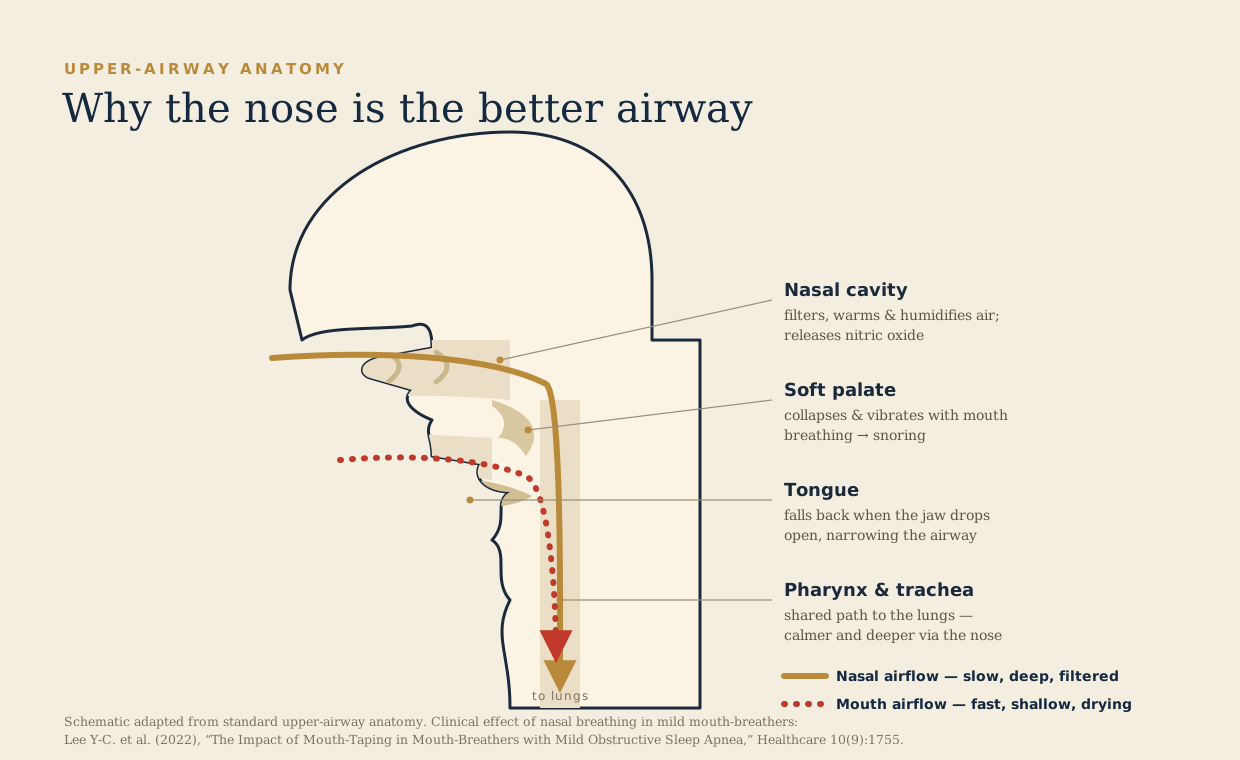
This is the part that flipped it for me. Your nose isn’t just a quieter way to move air. Breathing through it produces nitric oxide, warms and filters the air, and slows your breathing rate down, which nudges your nervous system toward the rest-and-digest side instead of the wired side.
Mouth breathing does the opposite. Drier airway, more snoring, that cottony 6am dry-mouth feeling, and a shallower, faster breath pattern that keeps you skating along the surface of sleep instead of sinking into it.
So the tape was never the point. Nasal breathing is the point. The tape is just a dumb little mechanical reminder because you can’t consciously control your mouth while unconscious. Embarrassingly simple, honestly.
Who it actually helped (me included)
Three weeks in: I woke up less. The dry mouth was gone by maybe night four. My partner said the snoring basically stopped, or rather, dropped to the point she stopped elbowing me at 3am, which is the only metric I trust.
If you wake up with a parched mouth, snore lightly, or just know you sleep with your jaw hanging open, you’re probably the person this helps. Mild stuff. Habit stuff.
Do not tape your mouth shut if you have diagnosed (or suspected) moderate-to-severe sleep apnea, you’re congested or sick, you’ve been drinking, you take sedatives, or you ever feel like you can’t get air through your nose. Taping over a real obstruction is genuinely dangerous: you’d be removing your backup airway. If you snore heavily, gasp, or stop breathing at night, see a doctor and get a sleep study before you go near tape. This is the one place where “just try it” is the wrong advice.
Figure 2
Who might try it, who must not
Probably the person it helps
- You wake up with a parched mouth
- You snore lightly
- You sleep with your jaw hanging open
Do not tape
- Diagnosed or suspected moderate-to-severe sleep apnea
- Congested, sick, after drinking or on sedatives
- You can't get air through your nose
- Heavy snoring or gasping: see a doctor first
How I actually do it
I don’t seal my whole mouth like a horror movie. You want a small strip, vertical, over the center of the lips. Enough to remind your mouth to stay shut, not enough to trap you. You should be able to open your mouth past it if you need to.
First night, test it for an hour on the couch while you’re awake. See how it feels. If nasal breathing feels like a struggle even sitting up calm, stop. That’s a sign your nose is the problem and tape won’t fix it.
And please don’t use random duct tape or even most drugstore tape. It either doesn’t hold through a night of movement, or it rips your lip skin off in the morning, or it’s coated in adhesive you don’t want sitting on your mouth for eight hours.
Use a tape made for sleep instead: skin-safe adhesive, strong enough to stay put through a night of movement, and easy to peel off in the morning.
One honest caveat: tape fixed the symptom for me. It didn’t fix the ten other things that were quietly wrecking my sleep: light timing, room temp, the last 90 minutes of my evening, the wrong form of magnesium I was taking for two years. Tape is one lever. A small one. Useful, but small.
[1] Lee, Y-C. et al. (2022). “The Impact of Mouth-Taping in Mouth-Breathers with Mild Obstructive Sleep Apnea.” Healthcare, 10(9), 1755.
[2] Rhee, J. et al. (2025). “Breaking social media fads and uncovering the safety and efficacy of mouth taping in patients with mouth breathing, sleep disordered breathing, or obstructive sleep apnea: a systematic review.” PLOS ONE, 20(5), e0323643.
Night-time breathing is one piece; the basics come first. The Deep Sleep Guide puts the core levers in one plan (light, rhythm, wind-down, bedroom), plus what to do when you lie awake at night and a printable sleep log. 16 pages, €4,99.
GET THE GUIDE →Tools we rate for this. Some are affiliate links, so we may earn a small commission if you buy through them, at no extra cost to you.
Comments
0 comments