
What actually causes brain fog, and what to check first
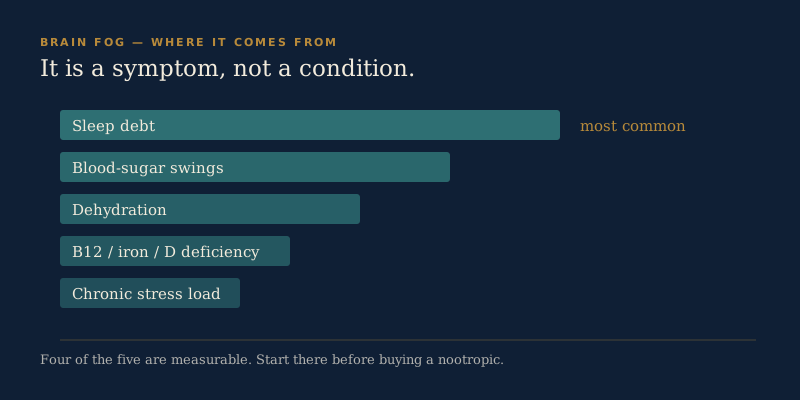
Brain fog is not a condition. It is what several unrelated problems feel like from the inside, which is exactly why it is so hard to fix by guessing. The word describes a sensation, not a cause.
The useful move is not finding the right supplement. It is working out which of a short list applies to you, because four of the five most common causes are measurable within a week and cost nothing to check.
1. Sleep debt: one of the most common causes
Not total hours, but accumulated deficit. The unpleasant part is that the feeling of tiredness plateaus after two or three short nights while the impairment keeps climbing. You stop noticing you are impaired long before you stop being impaired.
Worth knowing: deep sleep comes mostly in the first few hours after you fall asleep, and REM (which also matters for thinking) mostly toward the end, so short or broken nights cost you both.
2. A heavy meal on top of the afternoon dip
The fog that arrives an hour after eating and lifts by itself is often this. A large, carb-heavy meal can deepen the natural early-afternoon dip in alertness. It is one of the more reliable patterns because it repeats at the same time every day.
3. Dehydration
Unglamorous and genuinely common. A shortfall of a couple of percent is enough to measurably reduce attention and working memory. Most people who feel foggy at 3 p.m. have had coffee and nothing else since morning.
4. Nutrient deficiency: B12, iron, vitamin D
The only item on this list that needs a blood test, and the only one where guessing is genuinely useless. B12 and iron deficiency can cause fatigue and poor concentration that no amount of sleep fixes, and both are common enough to be worth ruling out before spending money on anything else. Vitamin D is worth testing in winter, but its link to fog is weak.
5. Chronic stress load
Sustained stress narrows working memory: there is less room for holding several things at once, which is precisely the sensation people describe as fog. Unlike the others, this one rarely resolves with a single intervention.
What to do with this
Take them in order. Sleep for a week, then look at what is left. Add water and a protein-containing breakfast, then look again. If the fog survives all of that, a blood test is the next reasonable step, not a nootropic.
Figure 1
Common causes, checked in order
- Sleep debtSleep properly for a week, then see what is left.
- A heavy meal on the dipFog an hour after eating that lifts by itself.
- DehydrationWater, not just coffee, since morning.
- Nutrient deficiencyThe one that needs a blood test; guessing is useless.
- Chronic stressNarrows working memory and rarely yields to one fix.
See a doctor promptly if the fog is sudden, severe, getting worse or comes with other symptoms. Don’t work through a checklist first. Thyroid problems, medications and depression are common causes too.
Almost everything sold for brain fog targets the fifth cause, while the first is one of the most common and costs nothing to fix.
Brain fog is usually a few fixable causes stacked on top of each other. Biohacking Secrets covers ten everyday levers (light, movement, recovery and more) in one 47-page guide.
GET THE GUIDE →Tools we rate for this. Some are affiliate links, so we may earn a small commission if you buy through them, at no extra cost to you.
Comments
0 comments