
The after-meal walk that blunts your blood-sugar spike
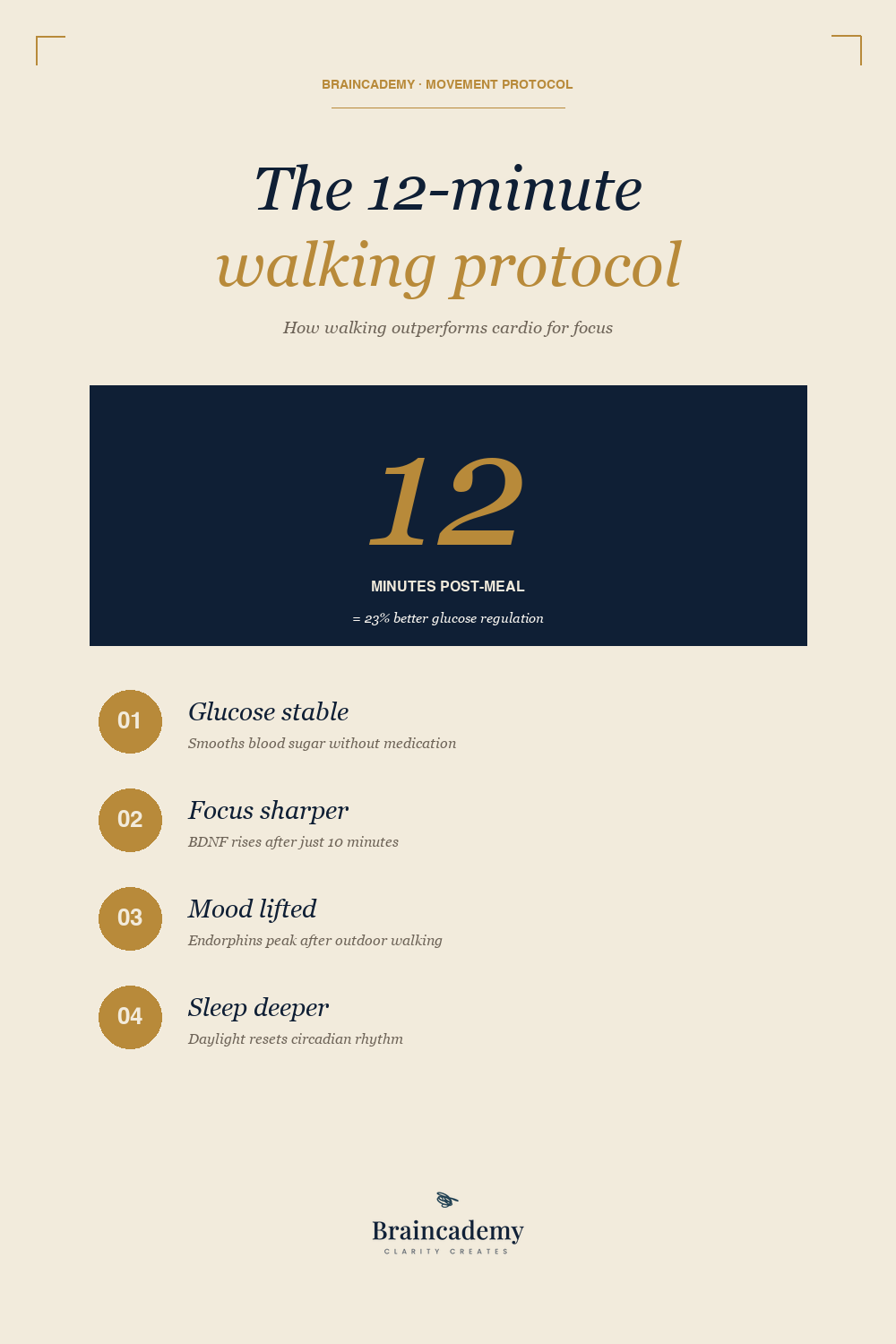
Probably the most underrated intervention in the entire wellness world. Breaking up long sitting with short, light walks lowers the post‑meal blood‑sugar spike, and even standing breaks help a little, according to a 2022 meta‑analysis of seven lab trials in Sports Medicine.[1] For a walk after a meal, ten minutes is the dose used in trials (Reynolds et al., 2016).
You do not need to walk fast. Casual pace is enough. The mechanism is simple: muscle contraction pulls glucose out of the bloodstream into the muscle tissue, bypassing the insulin pathway. Insulin responses come down too.
Figure 1
Why a casual walk works
- You eatBlood sugar starts to rise.
- You walk, casual paceYour leg muscles contract.
- Muscles take up glucoseContraction pulls it out of the blood, bypassing the insulin pathway.
- A smaller spikeInsulin responses come down too.
What the trials measured: in a randomised crossover study with 41 adults with type 2 diabetes, a 10‑minute walk after each main meal lowered the post‑meal blood‑sugar rise by about 12% compared with one 30‑minute walk at another time of day, and by about 22% after the evening meal, the most carbohydrate‑heavy one (Reynolds et al., Diabetologia, 2016). Same total minutes, better timing.
Figure 2
Ten minutes after each meal vs. one 30-minute walk
The annoying part is that nobody talks about it because it does not sell anything. There is no supplement to take, no app to download, no piece of equipment. Just walk. If you need a step tracker to stay accountable, the basic Garmin or Apple Watch works. Whoop is overkill for this. Oura is great but not necessary.
“The effect is moderate, free and consistent, and almost nobody does it.”

Disclosure: Amazon affiliate link · We only recommend gear we actually use.
One tip if you work from home: park your laptop charger or your coffee on the other side of the apartment. Every meal triggers a natural mini‑walk. The behavior design beats willpower every time.
[1] Buffey A.J. et al. (2022). “The Acute Effects of Interrupting Prolonged Sitting Time in Adults with Standing and Light-Intensity Walking on Biomarkers of Cardiometabolic Health in Adults: A Systematic Review and Meta-analysis.” Sports Medicine, 52(8), 1765–1787.
Walking after meals is one part of the movement chapter. Strength training and Zone 2 cardio, framed as the minimum effective dose, are the rest. It’s Chapter 5 of Biohacking Secrets.
GET THE GUIDE →
Comments
0 comments