
The best bedroom temperature for sleep (and why yours is probably wrong)
For about a year I was doing everything “right.” Magnesium, no screens, the whole evening artillery. And I’d still lie there at 1am, weirdly hot, kicking one leg out from under the duvet like that ever fixes anything.
Turns out I was fighting my own biology in the dumbest possible way. The question almost nobody asks: what’s the best bedroom temperature for sleep, and is mine quietly wrecking me? For me the answer was embarrassingly simple. My room was too warm.
The best bedroom temperature for sleep: what the science says
Short version: a cool room suits most people. Roughly 16–19°C (60–67°F) is the range usually recommended. A little cooler if you run hot, a little warmer if you’re always cold, but cool, not cozy.
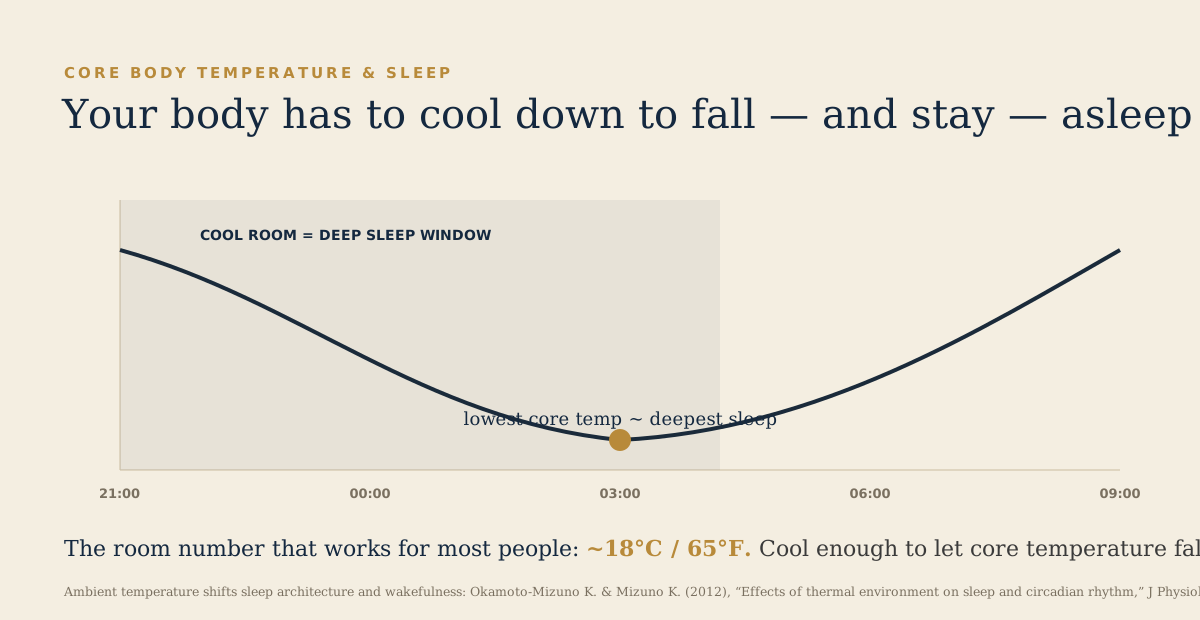
Here’s the why, and it’s the part that flipped it for me. To fall asleep, your core body temperature has to drop. It’s not optional. It’s the actual physiological signal. Your body sheds heat through your hands and feet, your core cools by a degree or so, and that dip is what tips you over the edge into sleep and then into the deep stuff. A warm room blocks the dip. So you lie there, body trying to dump heat into air that’s already too warm, and nothing happens.
When researchers nudge the ambient temperature too high, the pattern is consistent: more wakefulness, less slow-wave and REM sleep, more of that thrashing, half-awake feeling.[1] It’s not in your head. It’s in the thermostat.
Figure 1
Why a warm room keeps you up
- Heat leavesThrough your hands and feet.
- Core coolsYour core body temperature has to drop.
- Sleep followsThat dip tips you into sleep, then into deep sleep.
- Room too warm?The dip is blocked: more waking, less slow-wave and REM sleep.
Why “cool” beats “warm and cozy”
This is the counter-intuitive bit. Cozy feels like the sleep move. Warm room, heavy duvet, socks, the works. But cozy is a falling-asleep feeling, not a staying-asleep one. Or actually, not even that. What you want is a cool room and a warm bed. Warm hands and feet (they open the blood vessels and help you dump core heat), cool air around your face. That split is the trick. Not one temperature everywhere.
Figure 2
Cool room, warm bed
Cool room
- Cool air around your face
- Lets your core temperature drop
- Cool, not cozy
Warm bed
- Warm hands and feet
- They open the blood vessels and help dump core heat
- A breathable duvet so the heat can leave
It’s the same reason a warm bath an hour before bed helps you sleep, not because it heats you up, but because the rebound afterward drops your core temp faster. Everything points the same direction: down.
The fixes, cheapest first
Before you buy anything: drop the thermostat into that cool range, crack a window, and kick the heavy duvet for something breathable. That alone made a big difference for me. Free.
Next lever is the duvet itself. If you’re sweating under a thick synthetic one, that’s your problem: trapped heat with nowhere to go. A breathable, temperature-regulating duvet or a cooling mattress topper lets the heat actually leave instead of pooling around you.
I went looking for a topper that wasn’t a gimmick, something that genuinely pulls heat instead of just feeling cold for ten minutes then warming up like the rest.

Disclosure: affiliate link · I only point at the category I’d actually buy from.
The thing nobody tells you
Temperature is one lever. A big one (bigger than most of the supplements I was stacking), but still just one. If your sleep schedule is all over the place, or you’re taking the wrong form of magnesium, a cool room won’t save you on its own.
But it’s the cheapest place to start. You probably already own a thermostat and a window. Tonight, before you buy a single gadget: turn it down into the 16–19°C range, open the window an inch, and see what your body does when you finally stop fighting it.
[1] Okamoto-Mizuno K. & Mizuno K. (2012). “Effects of thermal environment on sleep and circadian rhythm.” Journal of Physiological Anthropology, 31(1), 14.
Room temperature is one lever. The Deep Sleep Guide puts the core levers in one plan (light, rhythm, wind-down, bedroom), plus what to do when you lie awake at night and a printable sleep log. 16 pages, €4,99.
GET THE GUIDE →Tools we rate for this. Some are affiliate links, so we may earn a small commission if you buy through them, at no extra cost to you.
Comments
0 comments